45 Bible Verses About Letting Go of Someone You Love

Maybe you’re here after another night of replaying the last conversation, staring at a silent phone, or trying to understand how you can still love someone you know you may need to release. If your heart feels torn between grief, hope, confusion, and surrender, this page is for you.
Here you’ll find Bible verses gathered for the real emotions behind letting go - heartbreak, anxiety, forgiveness, loneliness, trust, and the fragile hope of beginning again. It’s organized to help you find comfort for this tender letting go and gently move into the verses that meet you where you are.
Quick answer
Best Bible verses about letting go
Best overall
“Trust in the Lord with all your heart and lean not on your own understanding; in all your ways submit to him, and he will make your paths straight.”
Broken heart
“The LORD is close to the brokenhearted and saves those who are crushed in spirit.”
When anxiety rises
“Cast all your anxiety on him because he cares for you.”
Choosing forgiveness
“Bear with each other and forgive one another if any of you has a grievance against someone. Forgive as the Lord forgave you.”
Guarding your heart
“Above all else, guard your heart, for everything you do flows from it.”
Hope to move forward
“Do not dwell on the past. See, I am doing a new thing!”
On this page
- When letting go of someone you love feels impossible
- What the Bible says about letting go
- Bible verses for a broken heart
- Bible verses about trusting God with the relationship
- Bible verses for releasing fear, anxiety, and overthinking
- Bible verses about forgiveness and letting go of resentment
- Bible verses for letting go of the past and embracing new beginnings
- How to know when God may be asking you to let someone go
- A gentle prayer for letting go of someone you love
- How to use these Bible verses in real life
When letting go of someone you love feels impossible
Letting go can feel especially painful when your heart still cares, still remembers, and still hopes in small hidden places. If you came looking for bible verses about letting go of someone you love, you are not weak for needing comfort before clarity.
Acknowledge heartbreak, grief, betrayal, confusion, and fear without shame
Heartbreak can bring so many feelings at once: sadness, anger, shock, disappointment, fear, and even shame for still missing someone who hurt you. Scripture does not rush you past that pain. God meets you honestly, right where your heart is tender.
“The LORD is close to the brokenhearted and saves those who are crushed in spirit.” - Psalm 34:18 (NIV)
“Blessed are those who mourn, for they will be comforted.” - Matthew 5:4 (NIV)
If your grief feels heavy today, you may also find comfort in these Bible verses about heartbreak. Sometimes the first holy step is simply telling God the truth: “This hurts, and I do not know how to move forward.”
Clarify that letting go is not the same as stopping love or pretending it didn’t matter
Letting someone go does not mean the relationship was meaningless. It does not mean you never loved them, or that you must erase every memory to be faithful. Sometimes letting go means releasing control over the outcome while asking God to guard what remains tender in you.
“Trust in him at all times, you people; pour out your hearts to him, for God is our refuge.” - Psalm 62:8 (NIV)
Biblical love is not possession, pressure, or panic. Love can pray, bless, forgive, remember with gratitude, and still accept that closeness may no longer be wise or possible.
“Love is patient, love is kind. It does not envy, it does not boast, it is not proud.” - 1 Corinthians 13:4 (NIV)
Set a comfort-first tone for women navigating breakup, separation, distance, or unanswered love
Maybe you are grieving a breakup, a slow fading, a relationship that never became what you hoped, or the ache of being the one who carried so much emotional weight. Maybe silence on your phone feels louder than you expected. God is not distant from that kind of pain.
“My flesh and my heart may fail, but God is the strength of my heart and my portion forever.” - Psalm 73:26 (NIV)
You do not have to force yourself to be “over it” today. Let this be a gentle place to breathe, receive Scripture by feeling, and remember that God can hold both your love and your release.
What the Bible says about letting go
In Scripture, letting go is not cold detachment or pretending your heart is fine. It is the tender, trembling choice to place a person, a relationship, and an outcome into God’s hands when your own hands are exhausted.
Letting go as surrendering control to God
The Bible often describes trust as releasing the need to understand every turn before you obey. When you still love someone, this can feel especially hard - because your heart wants certainty, reassurance, and a clear ending. God invites you to trust His guidance one step at a time.
“Trust in the Lord with all your heart and lean not on your own understanding; in all your ways submit to him, and he will make your paths straight.” - Proverbs 3:5-6 (NIV)
“Commit your way to the Lord; trust in him and he will do this:” - Psalm 37:5 (NIV)
If you need more verses for this kind of surrender, these Bible verses about trusting God can help steady your heart.
Releasing revenge, panic, and the need to force an outcome
Letting go also means refusing to let pain turn you into someone you do not want to become. You may feel tempted to send one more message, prove your side, replay every wound, or make them understand. Scripture gently calls you back to prayer, peace, and trust in God’s justice.
“Do not take revenge, my dear friends, but leave room for God’s wrath, for it is written: ‘It is mine to avenge; I will repay,’ says the Lord.” - Romans 12:19 (NIV)
“Do not be anxious about anything, but in every situation, by prayer and petition, with thanksgiving, present your requests to God.” - Philippians 4:6 (NIV)
“And the peace of God, which transcends all understanding, will guard your hearts and your minds in Christ Jesus.” - Philippians 4:7 (NIV)
Peace does not mean the situation was painless. It means God can guard your heart while you stop trying to control what only He can handle.
Trusting that God can hold what you cannot hold together
Some relationships end suddenly; others fade slowly until you hardly recognize what remains. Either way, God is not asking you to carry the whole weight alone. He can hold your grief, your questions, the other person, and the future you cannot yet see.
“Cast your cares on the Lord and he will sustain you; he will never let the righteous be shaken.” - Psalm 55:22 (NIV)
“As for God, his way is perfect: The Lord’s word is flawless; he shields all who take refuge in him.” - Psalm 18:30 (NIV)
Letting go, biblically, is not losing love. It is choosing refuge in God when love has become too heavy to carry by yourself.
Bible verses for a broken heart
Some losses do not leave all at once. If your chest feels tight, your thoughts keep circling, or you are trying to smile while quietly hurting, scripture makes room for that kind of pain without rushing you past it.
Verses about God being near to the brokenhearted
When a relationship ends or changes, one of the deepest fears is not just losing the person, but feeling alone inside the loss. This is where verses like Psalm 34:17-18 and Isaiah 43:2 matter so much: they remind you that God does not watch your heartbreak from a distance. He stays with you in it.
Psalm 46:1 can be a steadying verse for the moments when emotion rises fast and you need to remember that help is present, not far away. If you feel embarrassed by how deeply this hurts, let 2 Corinthians 1:3-4 reassure you that God meets afflicted hearts with comfort, not shame.
Verses about healing emotional wounds over time
Healing after letting go is often slower than we want. Some days feel lighter, then one small reminder opens everything again. Psalm 147:3 speaks gently to that reality: God heals broken hearts, and that kind of healing is often tender and gradual rather than instant.
Psalm 23:3 and Mark 5:34 also point toward restoration and wholeness. They can help you pray honestly: “Lord, I am still hurting, but I believe You can mend what feels torn.” If your pain feels especially raw, you may also want to spend time with our Bible verses about heartbreak for extra comfort.
Verses for nights when grief returns in waves
Night can make heartbreak feel louder. The unanswered questions come back, the memories replay, and what seemed manageable in the daytime suddenly feels heavy again. Psalm 30:5 is a beautiful reminder that weeping is not the end of the story, even when the night feels long.
Matthew 11:28 is a good verse to return to before sleep when you feel emotionally worn out, and John 14:27 speaks to the kind of peace your mind cannot manufacture on its own. On wave-like grief nights, choose just one verse, whisper the reference if that is all you can manage, and let God meet you there.
Bible verses about trusting God with the relationship
Trusting God with someone you love can feel tender and unfinished, especially when your heart still hopes for clarity. Scripture does not rush you past the ache; it gives you a steady place to stand while the outcome remains in God’s hands.
Trusting God when His plan is unclear
Sometimes the hardest part is not knowing whether this is an ending, a waiting season, or a redirection. When you cannot read the whole story, you can still ask God to guide the next faithful step.
“Wait for the LORD; be strong and take heart and wait for the LORD.” - Psalm 27:14 (NIV)
“But as for me, I watch in hope for the LORD, I wait for God my Savior; my God will hear me.” - Micah 7:7 (NIV)
Waiting does not mean pretending you feel peaceful every moment. It means bringing your questions back to the One who hears you, even when the relationship feels uncertain.
Submitting your desires, timeline, and future to Him
Letting God hold your future can be especially painful when you had imagined it with a specific person. But surrender is not empty; it is entrusting your plans to a faithful Father who sees more than you can see right now.
“Commit to the LORD whatever you do, and he will establish your plans.” - Proverbs 16:3 (NIV)
“For I know the plans I have for you,’ declares the LORD, ‘plans to prosper you and not to harm you, plans to give you hope and a future.” - Jeremiah 29:11 (NIV)
If you need more scripture for this daily act of release, these Bible verses about trusting God can help you keep turning your heart toward Him gently.
Believing God’s goodness without demanding immediate answers
God’s goodness is not measured by how quickly the pain resolves or whether the relationship turns out the way you hoped. His goodness is steady even in the quiet, even in unanswered texts, even in the slow work of healing.
“Taste and see that the LORD is good; blessed is the one who takes refuge in him.” - Psalm 34:8 (NIV)
“May the God of hope fill you with all joy and peace as you trust in him, so that you may overflow with hope by the power of the Holy Spirit.” - Romans 15:13 (NIV)
You do not have to force yourself into certainty. You can simply pray, “God, help me trust Your heart while I wait to understand Your hand.”
Bible verses for releasing fear, anxiety, and overthinking
When someone still lives in your thoughts, fear can sound like constant replay: what you should have said, what they meant, what might happen next. God’s Word gently interrupts that spiral and gives your heart somewhere safer to rest.
Casting your cares on God instead of replaying every detail
Overthinking feels productive, but usually it just keeps pain moving in circles. Scripture invites you to hand God the weight you were never meant to carry alone, especially when your mind keeps revisiting the same conversation, silence, or unanswered question.
“Cast all your anxiety on him because he cares for you.” - 1 Peter 5:7 (NIV)
“When anxiety was great within me, your consolation brought me joy.” - Psalm 94:19 (NIV)
“From the ends of the earth I call to you, I call as my heart grows faint; lead me to the rock that is higher than I.” - Psalm 61:2 (NIV)
If your thoughts feel loud, keep your prayer simple: Lord, I cannot carry this and heal at the same time. Please hold what I keep replaying.
Receiving Christ’s peace when your mind spirals
There are moments when heartbreak becomes mental exhaustion. Jesus does not shame your troubled mind; He meets it with a peace that is steadier than the outcome you are longing for. If you need more comfort for weary days, you may also find help in our Bible verses about rest.
“Peace I leave with you; my peace I give you. I do not give to you as the world gives. Do not let your hearts be troubled and do not be afraid.” - John 14:27 (NIV)
“You will keep in perfect peace those whose minds are steadfast, because they trust in you.” - Isaiah 26:3 (NIV)
“We take captive every thought to make it obedient to Christ.” - 2 Corinthians 10:5 (NIV)
Peace does not always arrive all at once. Sometimes it comes thought by thought, breath by breath, as you bring your mind back to Christ again.
Finding courage when you fear being alone
One of the deepest fears after letting go is not just losing them, but facing life without their presence. God speaks tenderly here: a person’s absence is real, but it does not mean you have been abandoned.
“So do not fear, for I am with you; do not be dismayed, for I am your God.” - Isaiah 41:10 (NIV)
“Be strong and courageous. Do not be afraid or terrified… for the Lord your God goes with you; he will never leave you nor forsake you.” - Deuteronomy 31:6 (NIV)
“For God has not given us a spirit of fear, but of power and of love and of self-discipline.” - 2 Timothy 1:7 (NIV)
This is often how courage begins: not with feeling strong, but with trusting that God stays when everything else feels uncertain.
Bible verses about forgiveness and letting go of resentment
Forgiveness can feel especially tender when you still love the person who hurt you. Scripture does not ask you to pretend the wound was small; it invites you to place bitterness, anger, and the longing for payback into God’s hands.
Forgiving without excusing harm
Forgiveness is not the same as saying what happened was okay. It does not require immediate trust, renewed closeness, or access to your heart; it begins with asking God to free you from bitterness while He helps you guard what is fragile.
“Bear with each other and forgive one another if any of you has a grievance against someone. Forgive as the Lord forgave you.” - Colossians 3:13 (NIV)
“Be kind and compassionate to one another, forgiving each other, just as in Christ God forgave you.” - Ephesians 4:32 (NIV)
If you are unsure what forgiveness should look like after betrayal, this gentle guide on the scriptures on forgiving and moving forward may help you separate healing from pretending.
Sometimes the first step is simply naming what you feel and letting Scripture meet you there.
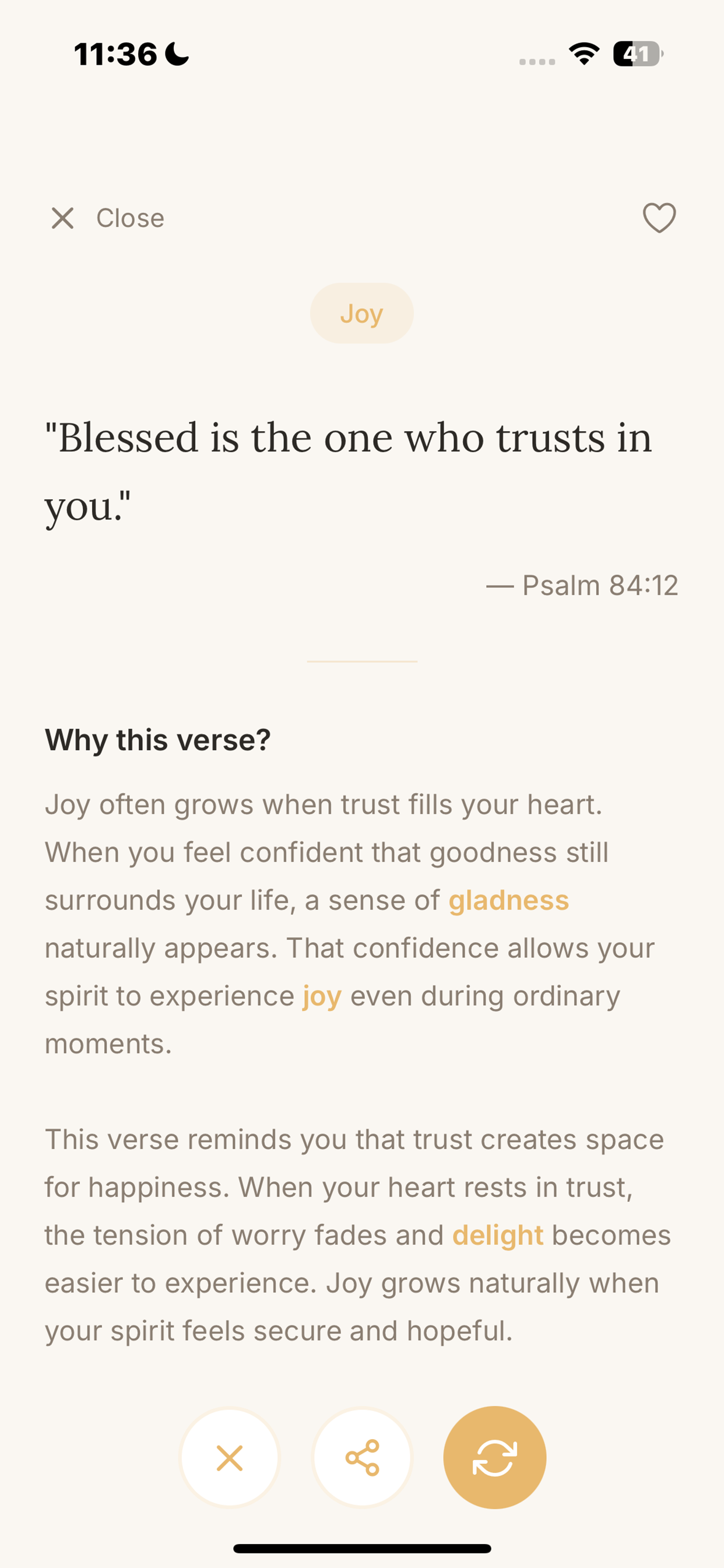
Open Faith Jar - free on the App Store
Tap how you feel right now - angry, hurt, guarded, or ready to forgive - and receive a verse for that exact place.
Leaving justice and vengeance with God
When someone has wounded you deeply, it is natural to want them to understand the pain they caused. But God lovingly calls you away from carrying the burden of judgment yourself, because your heart was not made to hold both grief and vengeance.
“Do not repay anyone evil for evil. Be careful to do what is right in the eyes of everyone.” - Romans 12:17 (NIV)
“Do not take revenge, my dear friends, but leave room for God’s wrath, for it is written: ‘It is mine to avenge; I will repay,’ says the Lord.” - Romans 12:19 (NIV)
You can tell the truth, set boundaries, and seek wise help without becoming consumed by proving your pain. God sees what happened, and His justice is not dependent on your constant replaying.
Choosing peace over retaliation, gossip, or emotional revenge
Letting go of resentment often shows up in quiet choices: not sending the message, not rehearsing the story for sympathy, not trying to make them feel what you felt. Peace does not mean silence about harm; it means refusing to let bitterness direct your next step.
“If it is possible, as far as it depends on you, live at peace with everyone.” - Romans 12:18 (NIV)
“Get rid of all bitterness, rage and anger, brawling and slander, along with every form of malice.” - Ephesians 4:31 (NIV)
Jesus understands that forgiveness may need to be chosen again and again, especially when memories return.
“Then Peter came to Jesus and asked, ‘Lord, how many times shall I forgive my brother or sister who sins against me? Up to seven times?’ Jesus answered, ‘I tell you, not seven times, but seventy-seven times.’” - Matthew 18:21-22 (NIV)
Bible verses for letting go of the past and embracing new beginnings
Some hurts do not stay in the past just because time has passed. When memories keep replaying, God’s Word gently helps you release what was without pretending it never mattered.
Forgetting what is behind without erasing the lesson
Letting go of the past is not the same as becoming numb or pretending you were unaffected. It means you stop building your identity around what happened, even while you keep the wisdom it taught you. Philippians 3:13–14 is especially tender here: Paul speaks about forgetting what is behind and pressing forward, not because the past was meaningless, but because God still has a future for you. If you are tempted to relive every conversation or blame yourself for what you missed, 1 John 1:9 and Psalm 103:12 remind you that God’s mercy reaches even your regrets.
Watching for the new thing God is doing
Sometimes heartbreak makes it hard to imagine anything new, good, or peaceful ahead. But Isaiah 43:18–19 invites you not to stay fixed on former things, because God is able to make a way where you cannot yet see one. New beginnings often arrive quietly: steadier mornings, fewer tears when their name comes up, a little more room to breathe. If you need more reassurance that God is not finished with your story, our Bible verses about new beginnings can help you keep looking for His gentle work.
Moving from loss toward hope, purpose, and renewal
Healing rarely feels dramatic. More often, it looks like small renewal - strength returning, hope reappearing, and your heart slowly learning that loss is not the end of your story. Romans 8:28 offers careful hope that God can work through what has hurt you, and 2 Corinthians 5:17 reminds you that your identity is not stranded in this chapter. Lamentations 3:22–23 is beautiful for this season too: every morning can hold fresh mercy, even if you are still healing. God can carry you forward with dignity, purpose, and a softer, stronger heart.
How to know when God may be asking you to let someone go
Sometimes the hardest part is not the pain itself, but the uncertainty: Lord, am I supposed to keep hoping, or is this where I release them to You? Scripture does not ask you to ignore red flags, silence your conscience, or call chaos “love.”
When the relationship repeatedly produces confusion, compromise, or harm
A relationship can matter deeply and still be unhealthy to keep holding onto. If it repeatedly pulls you into confusion, weakens your peace, or asks you to compromise what is right, that is worth taking seriously before God.
“Do not be misled: ‘Bad company corrupts good character.’” - 1 Corinthians 15:33 (NIV)
“Above all else, guard your heart, for everything you do flows from it.” - Proverbs 4:23 (NIV)
“Wounds from a friend can be trusted, but an enemy multiplies kisses.” - Proverbs 27:6 (NIV)
Discernment is not cruelty. Sometimes letting go is not giving up on love, but refusing to keep calling harm by a holy name.
When holding on is driven by fear instead of peace-filled trust
Sometimes we stay attached not because God is leading us to stay, but because we are terrified of loss, loneliness, or what life will look like after release. Fear says, I cannot survive if this ends. God gently teaches you to ask whether your grip is rooted in trust or panic.
“There is no fear in love. But perfect love drives out fear, because fear has to do with punishment. The one who fears is not made perfect in love.” - 1 John 4:18 (NIV)
“But seek first his kingdom and his righteousness, and all these things will be given to you as well.” - Matthew 6:33 (NIV)
“As for God, his way is perfect: The Lord’s word is flawless; he shields all who take refuge in him.” - Psalm 18:30 (NIV)
If your attachment is being fed more by dread than by steady faith, that may be a loving invitation from God to loosen your hold and let Him become your security.
How to seek wisdom through prayer, Scripture, and godly counsel
You do not have to make this decision in a rush. Ask God for wisdom, bring the relationship honestly into prayer, and pay attention to whether wise, mature believers see fruit of peace, truth, and health - or a pattern of sorrow and confusion.
“If any of you lacks wisdom, you should ask God, who gives generously to all without finding fault, and it will be given to you.” - James 1:5 (NIV)
“Do not conform to the pattern of this world, but be transformed by the renewing of your mind. Then you will be able to test and approve what God’s will is - his good, pleasing and perfect will.” - Romans 12:2 (NIV)
“Plans fail for lack of counsel, but with many advisers they succeed.” - Proverbs 15:22 (NIV)
If you need more help listening for God’s direction with an open heart, spend time with these bible verses about trusting god.
A gentle prayer for letting go of someone you love
Sometimes the hardest prayers are the simplest ones: the ones whispered through tears, silence, and not knowing what happens next. If your heart feels tired, let this section help you turn pain into honest words before God.
A short surrender prayer for daily use
When emotions change by the hour, a short prayer can steady you without asking you to have everything figured out. This kind of prayer is not about pretending you are fine. It is about returning, again and again, to God’s care.
You might pray: “Lord, You see what I still carry. I release this person, this hope, and this outcome into Your hands. Hold what I cannot hold together, and guide me in peace today.” Psalm 31:5 and Psalm 46:1 are helpful anchors for this kind of daily surrender, especially on mornings when your chest already feels heavy.
A prayer for women carrying heartbreak and unanswered questions
Some women are not only grieving a person, but also grieving the conversations that never happened, the clarity that never came, and the version of the future they quietly built in their hearts. God is gentle with that kind of pain.
You might pray: “Father, I still have questions, and I still miss what I thought this relationship would become. Meet me in the confusion. Keep me from chasing closure that only wounds me more. Be near to me tonight, and help me trust You one step at a time.” Lamentations 3:22-23 can remind you that mercy meets you in the morning, and Isaiah 43:2 can steady you when the grief feels too deep to explain. If you need more comfort for this kind of sorrow, you may also find help in our Bible verses about heartbreak page.
A prayer for peace, dignity, and healing after release
After you let go, there may still be urges to check, revisit, explain, or prove something. This is where prayer can protect your dignity and keep your heart soft without reopening every wound.
You might pray: “Jesus, heal what still aches. Keep me from bitterness, panic, or reaching for what You are asking me to release. Restore my peace, rebuild my strength, and teach me how to walk forward with grace.” Psalm 147:3 and Isaiah 54:10 offer a tender picture of healing that does not rush you, but does remind you that you are still held.
How to use these Bible verses in real life
Sometimes the hardest part is not finding a verse - it is knowing what to do with it when your chest tightens, your thoughts race, or the silence feels loud again. Let scripture meet you in small, honest ways, right where you are today.
Choose one verse for your current emotion and pray it back to God
You do not need to read everything at once. If you feel overwhelmed, choose one verse that matches your actual feeling - fear, grief, confusion, or exhaustion - and turn it into a simple prayer in your own words.
“When I am afraid, I put my trust in you.” - Psalm 56:3 (NIV)
“Come to me, all you who are weary and burdened, and I will give you rest.” - Matthew 11:28 (NIV)
“The Lord is my shepherd, he refreshes my soul. He guides me along the right paths for his name’s sake.” - Psalm 23:3 (NIV)
You might pray, “Lord, I am afraid again,” or, “Jesus, I am so tired of carrying this.” If your heart is especially tender, our Bible verses about heartbreak page can help you stay with one comfort theme at a time.
Journal what you are afraid to release and what you need God to hold
Journaling can gently uncover what is underneath the attachment. Sometimes it is not only the person - it is the future you imagined, the answers you never got, or the fear of being alone.
“Do not dwell on the past. See, I am doing a new thing!” - Isaiah 43:18-19 (NIV)
“Into your hands I commit my spirit; deliver me, Lord, my faithful God.” - Psalm 31:5 (NIV)
Try writing two honest lists: “What I am afraid will happen if I release this,” and “What I need God to carry for me now.” That kind of prayerful honesty creates room for clarity without forcing your heart to rush.
Return to the page during triggers, lonely evenings, and setbacks
Healing is rarely neat. A song, a date, an unanswered message, or a long evening can pull everything back to the surface. That does not mean you are back at the beginning; it means you need steady comfort again.
“Weeping may stay for the night, but rejoicing comes in the morning.” - Psalm 30:5 (NIV)
“Because of the Lord’s great love we are not consumed, for his compassions never fail. They are new every morning.” - Lamentations 3:22-23 (NIV)
“Why, my soul, are you downcast? Why so disturbed within me? Put your hope in God.” - Psalm 42:11 (NIV)
Come back to these verses as often as needed. On the days when your mind feels tired and your heart cannot choose what it needs, returning to one familiar page can be its own quiet form of mercy.
Frequently Asked Questions
What does God say about letting someone you love go?
God’s Word speaks about letting go as an act of trust, not a failure of love. Proverbs 3:5–6 (NIV) says, “Trust in the Lord with all your heart and lean not on your own understanding.” Sometimes letting go means placing the person, the outcome, and your unanswered questions into God’s hands. It also means releasing revenge and control - “Do not take revenge… but leave room for God’s wrath” (Romans 12:19, NIV), and “Cast your cares on the Lord and he will sustain you” (Psalm 55:22, NIV).
Letting go is not pretending the relationship meant nothing. It’s choosing to stop carrying what only God can hold. Isaiah 43:18–19 reminds us not to stay trapped in the past because God is able to do a new thing, even when your heart is still tender.
How do you know when God wants you to let someone go?
Usually, discernment comes gently over time, not in one dramatic moment. Ask God for wisdom - James 1:5 says He gives it generously. Pay attention to the fruit of the relationship: is it repeatedly producing confusion, compromise, fear, or emotional harm? Proverbs 4:23 says, “Above all else, guard your heart,” and 1 Corinthians 15:33 warns that unhealthy company can shape us more than we realize.
Romans 12:2 also helps here: as God renews your mind, you begin to discern His will more clearly. If you’ve prayed, sought wise counsel, and the relationship continues to pull you away from peace, truth, and obedience, God may be inviting you to release it. Not because He is cruel, but because He cares for your soul.
What does Proverbs 18:22 really mean?
Proverbs 18:22 says, “He who finds a wife finds what is good and receives favor from the Lord” (NIV). It honors the goodness of a godly marriage relationship. But it should not be used to pressure a relationship forward, prove that someone is “the one,” or convince yourself that every attachment must be preserved.
In other words, this verse celebrates the gift of a faithful spouse. It does not mean every romantic relationship is ordained to continue, and it does not ask you to force what God may be asking you to release.
What does Proverbs 19:17 say?
Proverbs 19:17 says, “Whoever is kind to the poor lends to the Lord, and he will reward them for what they have done” (NIV). It’s really a verse about compassion, generosity, and God’s care for mercy.
So while it isn’t a direct verse about heartbreak or letting go of someone you love, it still shows you something beautiful about God’s heart: He notices tenderness. If you are hurting, confused, or trying to love others well while your own heart aches, this verse reminds you that kindness matters to Him.
Is letting go of someone you love unbiblical?
No, letting go of someone you love is not unbiblical. Scripture calls us to pursue peace “as far as it depends on you” (Romans 12:18, NIV), but it does not require you to force closeness, maintain unhealthy access, or keep a relationship alive at any cost. Proverbs 3:5–6 reminds us to trust God beyond our own understanding, and Proverbs 4:23 gives clear permission to guard your heart.
Biblical love is faithful, but it is not frantic. Sometimes the most obedient thing you can do is entrust the relationship to God and step back with honesty, dignity, and peace.
Can you love someone and still let them go?
Yes, you can. In fact, sometimes letting go is one of the clearest forms of love. First Corinthians 13:4–7 shows that love is patient, unselfish, and not self-seeking. Real love does not cling simply because it is afraid to lose. It can bless, pray, and release.
Romans 8:38–39 also reminds us that God’s love is the love that never lets go completely. So even when a human relationship changes or ends, you are still held. You can love someone, stop forcing the outcome, and trust God to care for both of you better than you can.
Which Bible verse helps with heartbreak after a breakup?
A few especially tender verses are Psalm 34:18 - “The Lord is close to the brokenhearted” (NIV), Psalm 147:3 - “He heals the brokenhearted and binds up their wounds,” Matthew 11:28 - “Come to me, all you who are weary and burdened,” and John 14:27, where Jesus says, “Peace I leave with you; my peace I give you.”
Practically, many women find it helps to keep one verse for daytime spiraling and one for nighttime grief. For anxious daytime thoughts, try John 14:27. For the ache that returns at night, hold onto Psalm 34:18 or Matthew 11:28 and pray them slowly before sleep.
How can I pray when I still miss them?
Start honestly. You do not need polished words. Psalm 62:8 says, “Pour out your hearts to him, for God is our refuge” (NIV). You can name the person, say what you miss, admit what hurts, and tell God what you are afraid will happen if you truly let go. First Peter 5:7 says to cast “all your anxiety on him because he cares for you.”
A simple prayer can sound like this: “Lord, I still miss them. My heart feels overwhelmed.” That’s straight from Psalm 61:2. Then add, “Please carry what I cannot carry. Guard my heart, steady my mind, and teach me how to surrender this with love.” Honest prayer is still holy prayer.
Faith Jar
Find a verse for the moment you're actually in
Tap a feeling, save the scripture that meets you there, and come back to it when you need words for yourself or someone you love.