65 Bible Verses About Anger for a Calmer Heart

Maybe you’re here after snapping at someone you love, sitting in the quiet afterward with a tight chest and a racing mind. Or maybe the anger is still rising, and you need something steady to hold before harsh words, resentment, or shame take over. you are not alone
On this page, you’ll find Bible verses about anger gathered for real moments like these - when you feel triggered, hurt, guilty, defensive, or desperate for peace. It’s organized to help you find gentle Scripture for calming your heart, guiding your words, and turning back toward God with a calmer heart.
Quick answer
Best Bible verses about anger
Best overall
“My dear brothers and sisters, take note of this: Everyone should be quick to listen, slow to speak and slow to become angry, because human anger does not produce the righteousness that God desires.”
When triggered
“In your anger do not sin”: Do not let the sun go down while you are still angry,”
Watch your words
“A gentle answer turns away wrath, but a harsh word stirs up anger.”
Let go of revenge
“Do not take revenge, my dear friends, but leave room for God's wrath, for it is written: 'It is mine to avenge; I will repay,' says the Lord.”
Choose forgiveness
“Be kind and compassionate to one another, forgiving each other, just as in Christ God forgave you.”
Need self-control
“Better a patient person than a warrior, one with self-control than one who takes a city.”
On this page
- What the Bible says about anger
- Can anger ever be righteous?
- Bible verses about anger to read when you feel triggered right now
- Scriptures about controlling anger in your words
- Scriptures about controlling anger in your heart
- What Psalm 37 says about anger
- What Romans 12:19 means when you’re angry and hurt
- How to biblically fight anger
- Bible verses about anger in relationships and family life
- A prayer for when you feel angry
- How to use these anger scriptures in daily life
- When you need help faster than scrolling
What the Bible says about anger
Anger can rise quickly - after a sharp comment, a long day, a painful memory, or a moment when you feel unseen. The Bible does not ignore that feeling; it gently shows us how to bring anger under God’s wisdom before it harms our hearts, words, or relationships.
Explain that anger itself can be a real human emotion, but sinful expression is the danger
Scripture makes room for the reality that people feel angry. The danger is not simply noticing anger in your heart, but letting it rule your speech, fuel resentment, or push you toward revenge.
““In your anger do not sin”: Do not let the sun go down while you are still angry,” - Ephesians 4:26 (NIV)
This verse is tenderly honest: anger may come, but it must be handled with care. God invites us to pause before anger becomes harsh words, cold silence, contempt, or a wound we keep replaying.
Define the page promise: verses for anger, control, healing, and wise response
These Bible verses about anger are not just warnings; they are a pathway toward calm, repair, and wisdom. Some scriptures help when you feel triggered, some guide your words, and others help you release bitterness when the hurt runs deeper.
“My dear brothers and sisters, take note of this: Everyone should be quick to listen, slow to speak and slow to become angry,” - James 1:19 (NIV)
“because human anger does not produce the righteousness that God desires.” - James 1:20 (NIV)
As you read, you’ll find scripture to help with anger in real moments: when you want to snap back, when you are rehearsing an offense, when you feel ashamed, or when you need courage to respond with gentleness.
Set a comfort-first tone for readers feeling ashamed after losing their temper
If you already lost your temper, this page is not here to shame you. God’s heart is steady, merciful, and patient; He meets repentant hearts with compassion and gives us a better way forward.
“The Lord is compassionate and gracious, slow to anger, abounding in love.” - Psalm 103:8 (NIV)
God’s slowness to anger becomes our comfort and our example. You can confess what was wrong, ask for help, repair what you can, and begin again with His grace.
“Get rid of all bitterness, rage and anger, brawling and slander, along with every form of malice.” - Ephesians 4:31 (NIV)
“Be kind and compassionate to one another, forgiving each other, just as in Christ God forgave you.” - Ephesians 4:32 (NIV)
Can anger ever be righteous?
If you’ve ever wondered whether all anger is automatically wrong, scripture gives a gentler and more honest answer. The Bible makes room for anger that grieves evil - but it also lovingly warns how quickly that feeling can slide into pride, harshness, or revenge.
Contrast righteous anger at sin and injustice with self-centered anger
There is a difference between being troubled by what breaks God’s heart and being inflamed because our own ego feels bruised. Righteous anger is grieved by sin, injustice, cruelty, and harm; self-centered anger is usually about control, insult, interruption, or not getting our way.
“God is a righteous judge, a God who displays his wrath every day.” - Psalm 7:11 (NIV)
“Do not be quickly provoked in your spirit, for anger resides in the lap of fools.” - Ecclesiastes 7:9 (NIV)
God’s anger is always pure, measured, and holy. Ours often is not. That’s why even when your anger begins with something real, it still needs to be brought under God’s care before it spills onto others.
Use Ephesians 4:26 and Psalm 4:4 to show anger must not lead to sin
The clearest biblical pattern is not “never feel anger,” but “do not let anger rule you.” Anger may alert us that something is wrong, but it is a dangerous leader if we let it take over our words, tone, or decisions.
“In your anger do not sin”: Do not let the sun go down while you are still angry. - Ephesians 4:26 (NIV)
“Tremble and do not sin; when you are on your beds, search your hearts and be silent.” - Psalm 4:4 (NIV)
These verses slow us down. They tell us to pause, get quiet before God, and refuse to let a hot emotion become a sinful response. Anger may knock at the door, but it does not have to take the house.
Give a simple self-check: am I protecting love, or protecting my pride?
A simple question can reveal a lot: Is this anger defending what is good and loving, or is it defending my image, comfort, and pride? That question can be especially helpful in friendship hurt, marriage tension, parenting stress, or moments when exhaustion makes everything feel sharper.
“Pride only breeds quarrels, but wisdom is found in those who take advice.” - Proverbs 13:10 (NIV)
“The prudent overlook an insult.” - Proverbs 12:16 (NIV)
If your anger is pushing you toward contempt, scorekeeping, or the need to “win,” pride may be at the center. But if it moves you toward truth, protection, and wise love without cruelty, you’re asking a better question already.
Bible verses about anger to read when you feel triggered right now
Sometimes anger rises before you can sort out what you’re even feeling. When your chest is tight, your thoughts are racing, or your words are about to come out sharp, a few steady verses can help slow the moment down.
Quick-to-read list of core verses for immediate calm
If you feel activated right now, don’t overcomplicate it. Start with short, grounding scriptures that call your heart back to wisdom, patience, and surrender before the moment gets louder.
“A gentle answer turns away wrath, but a harsh word stirs up anger.” - Proverbs 15:1 (NIV)
“A hot-tempered person stirs up conflict, but the one who is patient calms a quarrel.” - Proverbs 15:18 (NIV)
“Better a patient person than a warrior, one with self-control than one who takes a city.” - Proverbs 16:32 (NIV)
“Refrain from anger and turn from wrath; do not fret - it leads only to evil.” - Psalm 37:8 (NIV)
“The prudent keep their knowledge to themselves, but a fool’s heart blurts out folly.” - Proverbs 12:23 (NIV)
These are the kinds of verses to whisper, text to yourself, or read twice before answering that message or walking back into the room.
Highlight listening before speaking from James 1:19-20
When you’re triggered, listening can feel like weakness. But in Scripture, listening is strength because it creates space between emotion and reaction.
“My dear brothers and sisters, take note of this: Everyone should be quick to listen, slow to speak and slow to become angry, because human anger does not produce the righteousness that God desires.” - James 1:19-20 (NIV)
James gives a simple order for heated moments: listen first, slow your mouth, slow your anger. If your heart feels flooded, this verse reminds you that rushing to speak usually won’t bring the outcome you’re hoping for.
Highlight gentle speech from Proverbs 15:1 and restraint from Proverbs 29:11
Not all anger sounds like yelling. Sometimes it comes out as a cutting tone, sarcasm, a cold response, or saying everything you feel just because you feel it. God’s wisdom invites a different kind of strength.
“A gentle answer turns away wrath, but a harsh word stirs up anger.” - Proverbs 15:1 (NIV)
“Fools give full vent to their rage, but the wise bring calm in the end.” - Proverbs 29:11 (NIV)
Gentle speech is not pretending nothing hurts. It’s choosing words that do not hand your anger the steering wheel. Restraint is holy wisdom in real time.
Scriptures about controlling anger in your words
When anger reaches our mouths, it can do damage in seconds that takes days, months, or years to repair. Scripture meets us here gently, helping us notice not just what we say, but the spirit and tone behind it.
How harsh words escalate conflict
Angry speech rarely stays small. A cutting reply, a raised voice, or words spoken just to sting can widen a hurt and turn one hard moment into ongoing strife.
“A hot-tempered person stirs up conflict, but the one who is patient calms a quarrel.” - Proverbs 15:18 (NIV)
“An angry person stirs up conflict, and a hot-tempered person commits many sins.” - Proverbs 29:22 (NIV)
“If you churn milk, you get butter; if you smack your nose, you get a bloody nose; if you stir up anger, you get strife.” - Proverbs 30:33 (NIV)
These verses remind us that words spoken in heat are not harmless release. They often multiply pain. Even when we feel justified, harsh speech can push a conversation away from healing and deeper into confusion, defensiveness, and regret.
Why a soft answer can de-escalate tension
The Bible does not treat gentleness as weakness. A calm reply is often an act of strength, because it refuses to let anger set the pace of the conversation.
“Those who guard their mouths and their tongues keep themselves from calamity.” - Proverbs 21:23 (NIV)
“To avoid quarreling is an honor; only fools insist on quarreling.” - Proverbs 20:3 (NIV)
“The one who has knowledge uses words with restraint, and whoever has understanding is even-tempered.” - Proverbs 17:27 (NIV)
Sometimes controlling anger in your words looks like saying less, pausing longer, or choosing not to answer every sharp comment. Restraint can feel invisible in the moment, but it protects peace far more than winning an argument ever could.
How anger shows up through sarcasm, passive-aggression, and sharp tone
Not all angry words sound loud. Sometimes anger slips out through icy silence, pointed jokes, repeated retelling of an offense, or a tone that says what polite words do not.
“Whoever would foster love covers over an offense, but whoever repeats the matter separates close friends.” - Proverbs 17:9 (NIV)
“Hatred stirs up conflict, but love covers over all wrongs.” - Proverbs 10:12 (NIV)
“But now you must also rid yourselves of all such things as these: anger, rage, malice, slander, and filthy language from your lips.” - Colossians 3:8 (NIV)
This is where many tender hearts need honesty without shame: sarcasm can be anger in disguise, and passive-aggression can still wound trust. If your words have felt sharp lately, ask God to soften not just your sentences, but your heart beneath them.
Scriptures about controlling anger in your heart
Some anger does not sound loud at all. It settles deep inside as replayed conversations, cold distance, or quiet resentment - and Scripture gently shows that hidden anger can wound the heart just as surely as spoken outbursts.
Bitterness, grudges, and resentment as slower forms of anger
Not all anger explodes. Sometimes it hardens. Bitterness grows when hurt is rehearsed over and over, and resentment can begin to shape how we see a person, a situation, or even ourselves.
“See to it that no one falls short of the grace of God and that no bitter root grows up to cause trouble and defile many.” - Hebrews 12:15 (NIV)
“But if I had cherished sin in my heart, the Lord would not have listened.” - Psalm 66:18 (NIV)
“When my heart was grieved and my spirit embittered, I was senseless and ignorant; I was a brute beast before you. Yet I am always with you; you hold me by my right hand.” - Psalm 73:21-23 (NIV)
These verses remind us that buried anger does not stay buried forever. But they also offer comfort: even when your heart feels tangled, God does not step away.
Verses about forgiveness and putting away malice
Forgiveness is not pretending the wound did not matter. It is refusing to let malice, contempt, and inward hostility keep living rent-free in your soul. God calls us not only to stop harmful patterns, but to put on a softer heart in their place.
“But now you must also rid yourselves of all such things as these: anger, rage, malice, slander, and filthy language from your lips.” - Colossians 3:8 (NIV)
“Therefore, as God’s chosen people, holy and dearly loved, clothe yourselves with compassion, kindness, humility, gentleness and patience. Bear with each other and forgive one another… Forgive as the Lord forgave you.” - Colossians 3:12-13 (NIV)
“Do not seek revenge or bear a grudge against anyone among your people, but love your neighbor as yourself. I am the Lord.” - Leviticus 19:18 (NIV)
If you need to stay a little longer with this healing work, our guide to verses about releasing resentment may help you pray through it gently.
How to surrender revenge and trust God with justice
When you have been hurt unfairly, revenge can feel like strength. But Scripture gives a better refuge: place justice back into God’s hands, and let Him carry what you were never meant to rule.
“Do not take revenge, my dear friends, but leave room for God’s wrath, for it is written: ‘It is mine to avenge; I will repay,’ says the Lord.” - Romans 12:19 (NIV)
“Do not be overcome by evil, but overcome evil with good.” - Romans 12:21 (NIV)
“Commit your way to the Lord; trust in him and he will do this… Be still before the Lord and wait patiently for him… refrain from anger and turn from wrath; do not fret - it leads only to evil.” - Psalm 37:5,7-8 (NIV)
Releasing revenge is not weakness, and it is not denial. It is trust. If anger and injustice feel tightly tangled for you right now, these Bible verses about trusting God can help steady your heart.
What Psalm 37 says about anger
Some anger burns hot in a moment, but some settles in and simmers. Psalm 37 speaks tenderly to that second kind too - the kind that keeps replaying what was unfair, what was said, and what you wish you could set right.
Unpack Psalm 37:8 in plain language
Psalm 37 does not minimize hurt, but it does warn us not to let anger become our place of residence. In plain language, this verse is saying: do not keep feeding the fire. Step back from wrath before it starts shaping your choices, your tone, and your peace.
“Refrain from anger and turn from wrath; do not fret - it leads only to evil.” - Psalm 37:8 (NIV)
That word refrain feels active. It means anger is not always something you simply “have”; sometimes it is something you must release, interrupt, and hand back to God before it carries you somewhere darker.
Explain the link between fretting, anger, and evil outcomes
Psalm 37 ties fretting and anger together because anxious stewing easily turns into sinful reacting. When we keep nursing the offense, we become more vulnerable to sharp words, revenge fantasies, cold withdrawal, or choices we would not make in a calmer spirit.
“A quick-tempered person does foolish things, and the one who devises evil schemes is hated.” - Proverbs 14:17 (NIV)
“Whoever is patient has great understanding, but one who is quick-tempered displays folly.” - Proverbs 14:29 (NIV)
“Wrath is cruel, anger is overwhelming, but who can stand before jealousy?” - Proverbs 27:4 (NIV)
Psalm 37 is honest: anger does not stay tidy for long. Left unchecked, it spills into outcomes that wound us and others.
Show how trust in God replaces stewing and retaliation
The answer in Psalm 37 is not denial - it is trust. Instead of circling the injury again and again, Scripture invites you to bring the whole ache to God and let Him hold what you cannot fix tonight.
“Trust in the Lord and do good; dwell in the land and enjoy safe pasture.” - Psalm 37:3 (NIV)
“Commit your way to the Lord; trust in him and he will do this.” - Psalm 37:5 (NIV)
“Pour out your hearts to him, for God is our refuge.” - Psalm 62:8 (NIV)
When you cannot stop replaying the hurt, this is a gentle next step: pour it out, then place it down. If you need more help with that kind of surrender, these Bible verses about trusting God can steady your heart.
What Romans 12:19 means when you’re angry and hurt
When someone wounds you, the ache can quickly turn into a desire to make things even. This passage meets that tender place with both honesty and relief: you do not have to carry the weight of revenge.
Explain vengeance belongs to God, not us
Romans 12:19 does not pretend injustice is small. It tells us that justice is real - but it is safest in God’s hands, not ours. When we try to repay hurt with hurt, anger usually grows heavier inside us instead of healing us.
“Do not say, ‘I’ll pay you back for this wrong!’ Wait for the Lord, and he will avenge you.” - Proverbs 20:22 (NIV)
“Do not seek revenge or bear a grudge against anyone among your people, but love your neighbor as yourself. I am the Lord.” - Leviticus 19:18 (NIV)
Letting God be Judge is not weakness. It is trust - the kind that refuses to let someone else’s sin decide who you become.
Connect Romans 12:19 with Romans 12:21 and doing good instead of revenge
Scripture does not just say, “Don’t retaliate.” It gives a better path: answer evil without becoming part of it. That may look like restraint, a gentle reply, prayer before texting back, or simply choosing not to rehearse the offense again and again.
“Do not be overcome by evil, but overcome evil with good.” - Romans 12:21 (NIV)
“But I tell you who hear me: Love your enemies, do good to those who hate you, bless those who curse you, pray for those who mistreat you.” - Luke 6:27-28 (NIV)
Sometimes scripture meets us best when we stop searching and just receive.
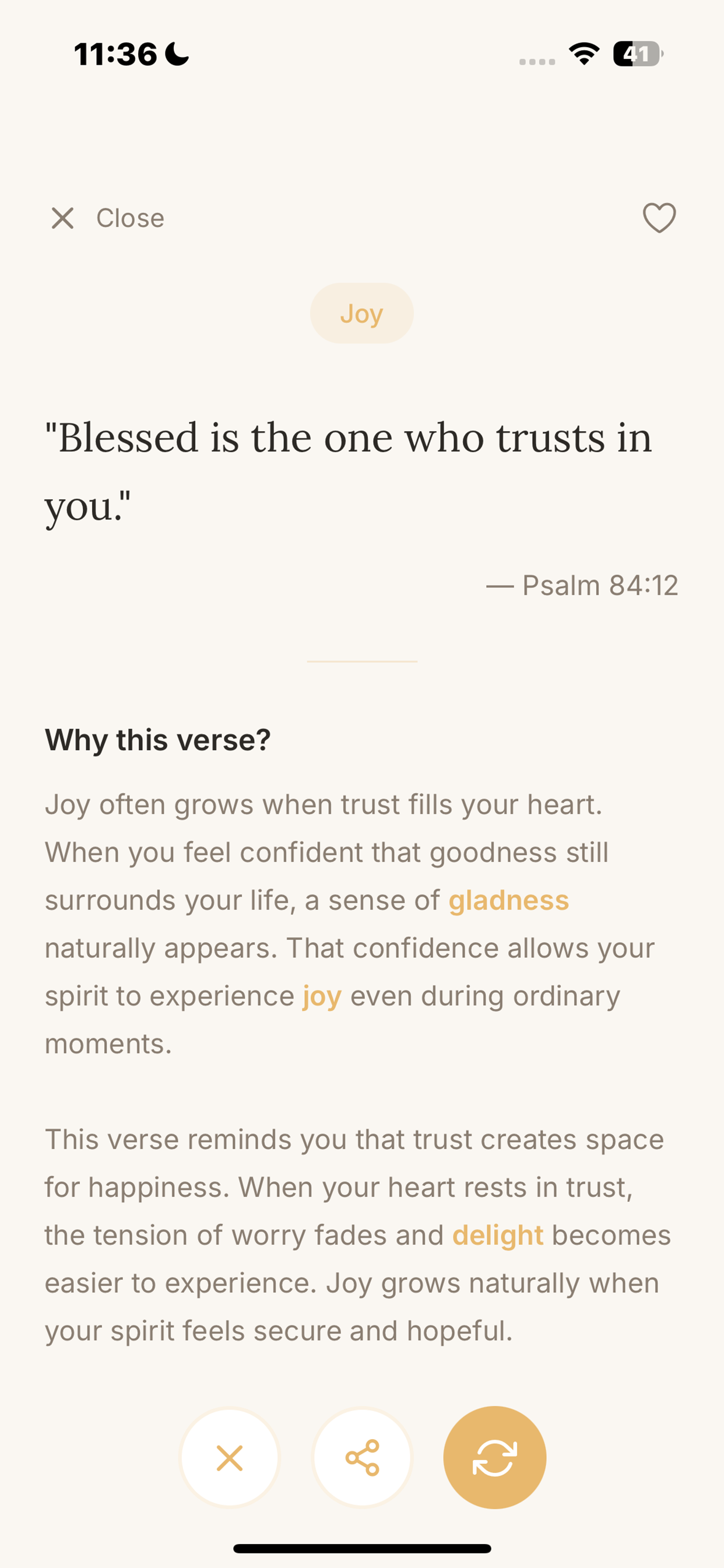
Open Faith Jar - free on the App Store
If you’re hurt, angry, or overwhelmed, you can tap the feeling and let a matched verse meet you gently in the moment.
Offer comfort for readers carrying betrayal, conflict, or unfair treatment
If you are carrying betrayal, family tension, friendship pain, or the sting of being treated unfairly, God is not asking you to deny the wound. He is inviting you to hand Him what is too sharp to hold alone. If trusting Him with the outcome feels hard, you may find comfort in these bible verses about trusting god.
“Cast all your anxiety on him because he cares for you.” - 1 Peter 5:7 (NIV)
“Do not let your hearts be troubled and do not be afraid.” - John 14:27 (NIV)
You can be honest about the hurt and still refuse revenge. In God’s care, release is possible even before resolution arrives.
How to biblically fight anger
Biblically fighting anger is not about pretending you are fine. It is about letting God meet you in the heated moment, slow your response, and lead you toward peace one faithful choice at a time.
Pause, pray, and delay your reaction
When anger rises, the first faithful step may be very small: pause before replying, breathe before reacting, and turn the moment into prayer. God does not shame you for needing help; He invites you to bring the whole storm to Him.
“Do not be anxious about anything, but in every situation, by prayer and petition, with thanksgiving, present your requests to God.” - Philippians 4:6 (NIV)
“And the peace of God, which transcends all understanding, will guard your hearts and your minds in Christ Jesus.” - Philippians 4:7 (NIV)
Listen first and name the real hurt under the anger
Anger often has something underneath it: fear, exhaustion, feeling dismissed, grief, embarrassment, or a desire to be understood. Scripture gently asks us to look beneath the argument and notice what is battling within us.
“What causes fights and quarrels among you? Don’t they come from your desires that battle within you?” - James 4:1 (NIV)
Naming the hurt does not excuse harshness, but it can help you respond more honestly. “I felt overlooked” is usually more healing than “You always do this.”
Seek reconciliation quickly and don’t let anger harden overnight
The longer anger sits untouched, the more it can become distance, resentment, or cold silence. Jesus takes reconciliation seriously, not to burden us, but to protect love, worship, and peace.
“Therefore, if you are offering your gift at the altar and there remember that your brother or sister has something against you,” - Matthew 5:23 (NIV)
“leave your gift there in front of the altar. First go and be reconciled to them; then come and offer your gift.” - Matthew 5:24 (NIV)
If nighttime is when your mind replays conflict, consider creating a simple Scripture reset before you sleep: pray, ask God what repair is needed, and choose one peaceful next step.
Replace anger habits with Spirit-formed habits like patience and gentleness
Anger patterns are not only stopped; they are replaced. The Holy Spirit forms a different way in us - one marked by steadiness, kindness, gentleness, and self-control.
“For the Spirit God gave us does not make us timid, but gives us power, love and self-discipline.” - 2 Timothy 1:7 (NIV)
“But the fruit of the Spirit is love, joy, peace, forbearance, kindness, goodness, faithfulness,” - Galatians 5:22 (NIV)
“gentleness and self-control. Against such things there is no law.” - Galatians 5:23 (NIV)
Bible verses about anger in relationships and family life
Anger rarely stays private for long. It can settle into the atmosphere of a friendship, a marriage, or a home, shaping how safe people feel around us and how safe we feel around them.
How anger damages closeness, safety, and trust
When anger becomes a pattern, people start bracing instead of relaxing. Scripture is honest that a hot temper does more than create one hard moment - it can slowly wear down connection and make peace feel fragile.
“A hot-tempered person stirs up conflict, but the one who is patient calms a quarrel.” - Proverbs 15:18 (NIV)
“A person without self-control is like a city whose walls are broken through.” - Proverbs 25:28 (NIV)
“Better to live in a desert than with a quarrelsome and nagging wife.” - Proverbs 21:19 (NIV)
These verses are not here to shame you. They simply name what many women already feel in tense seasons: repeated anger changes the emotional climate, and wisdom invites us to protect peace before damage deepens.
Verses about provoking children and stirring up conflict
Family anger often shows up in sharp correction, constant irritation, or reactions that are bigger than the moment itself. God cares about the tone of a home, especially where children are learning what love and safety sound like.
“Fathers, do not exasperate your children; instead, bring them up in the training and instruction of the Lord.” - Ephesians 6:4 (NIV)
“Starting a quarrel is like breaching a dam; so drop the matter before a dispute breaks out.” - Proverbs 17:14 (NIV)
“Do not make friends with a hot-tempered person, do not associate with one easily angered, or you may learn their ways and get yourself ensnared.” - Proverbs 22:24-25 (NIV)
If home has felt tense lately, these verses offer a gentle warning and a hopeful direction: patterns can be interrupted, and peace can be relearned.
Apply the verses to friendship, marriage, motherhood stress, and everyday home tension
Anger is not only shouting. Sometimes it sounds like sarcasm, cold distance, repeated retelling, or a clipped tone at the end of a long day. In friendship, marriage, and motherhood stress, love often looks like repairing quickly, speaking carefully, and refusing to let irritation lead. If a friendship is where the tension lives right now, these Bible verses about friendship can help you repair with grace.
“Love prospers when a fault is forgiven, but dwelling on it separates close friends.” - Proverbs 17:9 (NIV)
“Hatred stirs up conflict, but love covers over all wrongs.” - Proverbs 10:12 (NIV)
“Love is patient, love is kind… it is not easily angered, it keeps no record of wrongs.” - 1 Corinthians 13:4-5 (NIV)
If anger in your home is tangled up with exhaustion, overload, or mental clutter, it may help to pair these verses with Bible verses about rest. Sometimes a calmer response begins with a cared-for heart.
A prayer for when you feel angry
Sometimes anger moves faster than clear words do. When that happens, prayer can become a gentle place to stop, breathe, and let God meet you before your temper leads the moment.
Short prayer asking God for calm, wisdom, and self-control
If your heart feels hot and your thoughts are racing, you do not need a polished prayer. A simple cry for help is enough: “Lord, quiet me, steady me, and lead me by Your Spirit right now.”
“The mind governed by the flesh is death, but the mind governed by the Spirit is life and peace.” - Romans 8:6 (NIV)
“The LORD is slow to anger but great in power; the LORD will not leave the guilty unpunished.” - Nahum 1:3 (NIV)
You might pray: “Father, bring my mind under Your peace. Make me slower, softer, and wiser than I feel right now.”
Prayer of confession after angry words
After harsh words, many women carry both guilt and grief. This is a tender place to be honest with God: not hiding the outburst, not excusing it, but bringing it into His mercy and asking Him to help you repair what was harmed.
“But now you must also rid yourselves of all such things as these: anger, rage, malice, slander, and filthy language from your lips.” - Colossians 3:8 (NIV)
“Anyone who is never at fault in what they say is perfect, able to keep their whole body in check.” - James 3:2 (NIV)
A simple confession can sound like this: “Lord, my words were not holy, gentle, or safe. Forgive me. Cleanse my mouth and heart, and show me how to apologize with humility.”
Prayer to release revenge, bitterness, and offense to God
Some anger is loud, but some sits quietly for days as replayed conversations, cold distance, or secret fantasies of payback. This prayer is for that deeper ache - the hurt you do not want to keep carrying alone. If you need more help in this area, you may also find comfort in our guide on forgive and forget bible verse.
“Do not seek revenge or bear a grudge against anyone among your people, but love your neighbor as yourself. I am the LORD.” - Leviticus 19:18 (NIV)
“For if you forgive other people when they sin against you, your heavenly Father will also forgive you.” - Matthew 6:14 (NIV)
Pray gently: “God, I release this offense into Your hands. Pull bitterness out by the root. Teach me to trust You with justice and free my heart to walk in peace.”
How to use these anger scriptures in daily life
In the middle of real life, anger scriptures help most when they move from a page into your habits. A few small rhythms can steady your heart before a hard conversation, after a sharp moment, or at the end of a long day.
Memorize 3-5 anchor verses for heated moments
You do not need to memorize dozens of passages at once. Choose a few short verses you can reach for when your chest tightens, your tone changes, or your thoughts start racing.
“Better a patient person than a warrior, one with self-control than one who takes a city.” - Proverbs 16:32 (NIV)
“A person’s wisdom yields patience; it is to one’s glory to overlook an offense.” - Proverbs 19:11 (NIV)
“For the Spirit God gave us does not make us timid, but gives us power, love and self-discipline.” - 2 Timothy 1:7 (NIV)
Write them on a card, save them in your notes app, or whisper them in prayer before you answer. Hiding God’s Word in your heart gives you something holy to hold onto before anger takes over.
“I have hidden your word in my heart that I might not sin against you.” - Psalm 119:11 (NIV)
Journal prompts for identifying triggers and repeated patterns
Sometimes anger is the surface feeling, but hurt, fear, exhaustion, or disappointment is underneath. Journaling can help you notice what keeps setting you off: certain tones, unresolved resentment, feeling unheard, or simply running on empty.
A few gentle prompts: What was I protecting? What wound did this touch? What story did I start telling myself? Where do I need truth, rest, or repentance?
“What causes fights and quarrels among you? Don’t they come from your desires that battle within you?” - James 4:1 (NIV)
“The prudent keep their knowledge to themselves, but a fool’s heart blurts out folly.” - Proverbs 12:23 (NIV)
If exhaustion is feeding your irritability, it may also help to spend time with these Bible verses about rest.
Create a bedtime or conflict-repair routine with Scripture
Anger hardens when it is rehearsed all night. A simple evening rhythm can look like this: pause, confess any sinful words, pray for the other person, read one calming verse, and ask God for a soft heart by morning.
“Do not let the sun go down while you are still angry.” - Ephesians 4:26 (NIV)
“Refrain from anger and turn from wrath; do not fret - it leads only to evil.” - Psalm 37:8 (NIV)
If nights are when your mind replays everything, a quiet habit with a bible verse before sleeping at night can help you end the day in peace instead of stewing.
When you need help faster than scrolling
Sometimes anger moves faster than clear thinking. In those moments, you may not need a long article first - you may need one steadying verse that meets the exact feeling in your chest right now.
Introduce emotion-based Scripture support
When your heart is hot, hurt, or unraveling, searching through a long list can feel like one more burden. A gentler approach is to begin with the emotion itself and let Scripture meet you there: not as a random quote, but as timely help.
“Cast all your anxiety on him because he cares for you.” - 1 Peter 5:7 (NIV)
“Do not let your hearts be troubled and do not be afraid.” - John 14:27 (NIV)
That matters because anger is not always loud. Sometimes it is fear, exhaustion, betrayal, or simmering resentment wearing anger’s face. For readers carrying burnout too, our guide to bible verses about rest can be a quiet next step.
Explain how tapping ‘angry,’ ‘hurt,’ or ‘overwhelmed’ can surface the right verse faster
This is where emotion-based Scripture support becomes especially practical. If you can name the feeling - even with one simple word - you can often reach the right kind of verse faster: truth for anger, comfort for hurt, peace for overwhelm.
“The Lord is compassionate and gracious, slow to anger, abounding in love.” - Exodus 34:6 (NIV)
“Fools give full vent to their rage, but the wise bring calm in the end.” - Proverbs 29:11 (NIV)
“The mind governed by the flesh is death, but the mind governed by the Spirit is life and peace.” - Romans 8:6 (NIV)
Instead of forcing yourself to figure everything out while upset, you can start smaller: What am I feeling right now? Angry? Wounded? Flooded? That kind of honest naming can create just enough space for God’s Word to interrupt the spiral.
Offer a soft app CTA for readers in the middle of real emotional moments
If you are in the middle of a real moment - not calm, not finished processing, not ready for a perfect prayer - that is okay. You do not have to arrive polished for Scripture to help you.
Faith Jar is especially gentle here: rather than making you scan endlessly while dysregulated, it helps you begin with the feeling you actually have. In tender moments like that, one matched verse can be the mercy that keeps anger from turning into harsher words, shutdown, or regret.
“Above all else, guard your heart, for everything you do flows from it.” - Proverbs 4:23 (NIV)
“Finally, brothers and sisters, whatever is true, whatever is noble, whatever is right, whatever is pure, whatever is lovely, whatever is admirable - if anything is excellent or praiseworthy - think about such things.” - Philippians 4:8 (NIV)
Frequently Asked Questions
What are good Bible verses about anger?
A few of the most helpful Bible verses about anger are James 1:19–20, Proverbs 15:1, Ephesians 4:26–27, Psalm 37:8, Proverbs 14:29, and Romans 12:19. If you need to calm down quickly, start with James 1:19–20: “Everyone should be quick to listen, slow to speak and slow to become angry” (NIV). If your words feel sharp, Proverbs 15:1 is a steady guide: “A gentle answer turns away wrath, but a harsh word stirs up anger.”
If you are trying not to let anger settle deep in your heart, Ephesians 4:26–27 reminds you not to let anger lead you into sin or linger too long. Psalm 37:8 helps when you feel worked up and restless: “Refrain from anger and turn from wrath.” And when you’ve been hurt deeply, Romans 12:19 is a lifeline, gently reminding you to release revenge and trust God with justice.
What is Romans 12:19?
Romans 12:19 says, “Do not take revenge, my dear friends, but leave room for God’s wrath” (NIV). In plain words, it means you do not have to carry the burden of payback. God sees what happened. He is just, and He is better at handling wrong than we are.
That does not mean pretending the hurt was small or staying silent about evil. It means placing justice in God’s hands instead of letting anger rule your own. The next verse helps too: Romans 12:21 says, “Do not be overcome by evil, but overcome evil with good.” Releasing revenge is not weakness - it is a holy kind of freedom.
How to biblically fight anger?
A simple biblical path is this: pause and pray, listen before speaking, name the hurt underneath the anger, and seek repair quickly. James 1:19–20 gives a beautiful starting place - be quick to listen, slow to speak, and slow to become angry. Even a short prayer like, “Lord, steady me before I answer,” can create space for wisdom.
Then ask yourself what is really hurting beneath the heat - fear, disrespect, exhaustion, grief, disappointment. Ephesians 4:26–32 reminds us not to let anger harden into bitterness, but to move toward kindness, forgiveness, and honest reconciliation. You do not have to win the moment; you can let God teach your heart a gentler response.
What does Psalm 37 say about anger?
The clearest line is Psalm 37:8: “Refrain from anger and turn from wrath; do not fret - it leads only to evil” (NIV). That verse is tender and direct. It shows that stewing, spiraling, and clinging to fury do not protect us - they usually pull us somewhere darker than we meant to go.
The surrounding verses, especially Psalm 37:5–8, keep turning the heart away from agitation and back toward trust: commit your way to the Lord, trust in Him, be still before Him, wait patiently for Him. Psalm 37 does not just say, “Stop being angry.” It offers something better to do with that anger - bring it into God’s presence and let trust replace the fire.
Is anger a sin in the Bible?
Not always. The Bible makes room for anger as a real human emotion. Ephesians 4:26 says, “In your anger do not sin” (NIV), which means anger itself is not automatically sinful. Psalm 4:4 gives a similar picture: feel the emotion, but quiet yourself before God rather than letting it take over.
What becomes sinful is what anger grows into - revenge, contempt, cruel words, icy silence, bitterness, or refusing to make peace. Scripture takes anger seriously because it can spread into so many corners of the heart. So if you feel angry, you do not need to panic or feel ashamed right away. Bring it to God early, before it becomes something harsher.
How can I control my temper with Scripture?
One of the best ways is to keep a few short verses close enough to reach in the exact moment your temper rises. Try Proverbs 15:1: “A gentle answer turns away wrath,” Proverbs 16:32: “Better a patient person than a warrior, one with self-control than one who takes a city,” and 2 Timothy 1:7: “For the Spirit God gave us does not make us timid, but gives us power, love and self-discipline” (NIV).
Memorize them, pray them, and repeat them before you answer the text, raise your voice, or replay the argument again. Scripture helps interrupt the rush. It gives your heart a truer sentence to stand on while your emotions are still loud.
What Bible verse helps when I am angry at someone who hurt me?
If someone has wounded you deeply, Romans 12:19 is a safe place to begin: release revenge and let God hold justice. Leviticus 19:18 adds, “Do not seek revenge or bear a grudge.” That does not erase the pain - it simply keeps the pain from becoming your master.
For the heart itself, Ephesians 4:31–32 invites you to put away bitterness, rage, and malice, and to move toward kindness and forgiveness. And when the hurt still feels heavy, 1 Peter 5:7 is deeply comforting: “Cast all your anxiety on him because he cares for you” (NIV). You do not have to deny the wound to forgive. You can tell God the full truth and let Him carry what you cannot.
What if I already sinned in my anger?
Then this is not the end of your story. If angry words already came out, or you crossed a line you regret, God still welcomes you back with mercy. Ephesians 4:31–32 shows the next faithful step: put away what was harmful, and choose kindness, tenderness, and forgiveness instead. That may mean confessing to God, apologizing honestly, and repairing what you can.
And after repentance, receive peace too. Philippians 4:6–7 reminds you to bring everything to God in prayer, and His peace will guard your heart and mind in Christ Jesus. Shame likes to tell you that one outburst defines you. Grace says otherwise. In Christ, you can tell the truth, make amends, and begin again with a softer heart.
Faith Jar
Find a verse for the moment you're actually in
Tap a feeling, save the scripture that meets you there, and come back to it when you need words for yourself or someone you love.